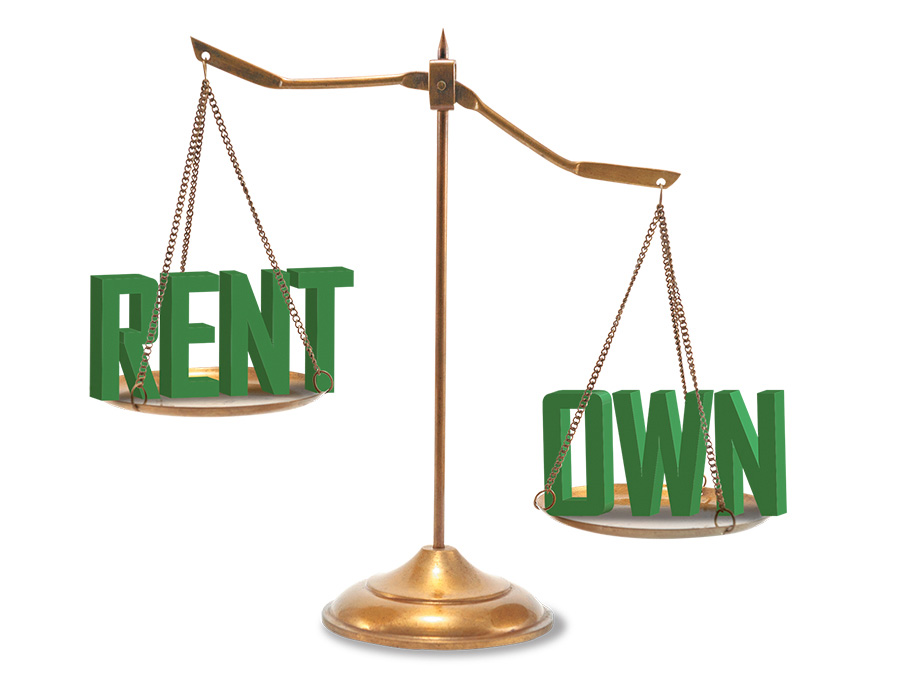
To help you determine if owning a custom property would be the right move for your program, here are a few common scenarios you might find yourself in while deciding between renting or purchasing an exhibit, along with key points to consider before pulling the trigger.
You have a limited budget. Custom exhibits offer more flexibility and fewer limitations than rentals, but they frequently come with bigger price tags and higher up-front costs. Therefore, exhibitors with tight budgets instinctively think that the best option is to rent, but this isn't always the case. Look at the whole picture and consider how many times you'll be exhibiting, the shipping and drayage costs associated with both options, storage fees, etc.
In general, conversations about new exhibits should be focused on your company's goals and objectives, hopes for return on investment, and the longevity of the program. I suggest looping in your accounting department and discussing the financial implications of renting versus owning. One important topic to factor into your decision making is depreciation, an accounting methodology that's used to allocate the cost of your owned exhibit over its life expectancy. Ultimately, whatever you decide to purchase becomes an asset to the company and not just an expensed line item, and there may even be a tax benefit. Another point to consider is the cost of insurance, as rental hardware is typically insured by an exhibit house, while covering a custom property is up to the purchaser.
You are worried about your booth looking like a rental. Depending on which system you use and the provider you choose to work with, rental exhibits run the gamut from inexpensive and somewhat plain to head-turning options that you'd never know are not custom. Many rentals comprise modular systems made from frames and/or aluminum extrusions that can be reconfigured in thousands of different ways and skinned with custom graphics so that you'll stand apart from other exhibitors using the same system.
For example, at the Global Gaming Expo, one of my clients rented a good portion of his booth, but we gave the conference room a distinctive look by skinning it with backlit frosted acrylic panels. These panels needed to be purchased, but savings were found in renting the frames in which they were set. There are many substrates to choose from when skinning a rental system, from silicone-edge graphics (SEGs) and Sintra to wood and colored Plexiglas. You can even build custom logos out of sturdy substrates and mount them to stand-offs to add dimensionality to your rented frames.
modified, you are likely going to be better off with a custom stand.
Your exhibit has to travel to multiple cities with very close show dates. It likely does not make sense to ship a custom booth from San Francisco to New York to Orlando to Houston over a two-month period, especially if it is heavy or fragile. At the end of the day, if your owned booth just can't make it everywhere you need it to go and your shipping expenses are going through the roof, you might choose a custom exhibit as your main design but rent a property for smaller events or shows in more far-flung locales. So sit down with your trade show calendar and establish where a custom purchased exhibit will give you the most bang for your buck – likely factors include the size of the event, the demographics of the audience, and the results of your previous exhibiting endeavors – and where a less complex rental will suffice. Once you've made these determinations, ask your exhibit house if it has facilities or partners in the cities where you plan to use a rental to potentially save you from crazy shipping expenses. Alternatively, you can rent through a local exhibit house or directly from the general service contractor.
Your company's messaging changes based on the target audience at a particular show, or you know you'll need to make a lot of modification to standard rental components. If your program requires that the majority of exhibit components be modified and reconfigured, you are likely going to be better off with a custom stand, as rental pieces need to be returned in their original condition. This could be the case for exhibitors who have complex wire-management needs or those whose companies have strict brand standards that mandate that everything from shelving to extrusions be a specific Pantone color. Be sure to take note of your deal-breakers and determine if they prohibit you from renting stock components.
On the flip side, if you just need to change out the occasional graphic and message, a rental booth might work just fine. Since rental systems are often built to accommodate SEG or hard-panel infills, you can rent a booth and purchase a series of graphics that can be swapped out to target the audience you're trying to reach. For instance, if you offer sanitation supplies for the medical industry and exhibit at events for the dentistry, ophthalmology, and dermatology sectors, you could still rent a single booth design and inventory three sets of custom graphics tailored to each of these audiences.
You're a U.S. company planning to exhibit overseas, and you aren't sure where to start. If you are launching an international exhibiting program, the logistics of getting your custom stand cleared through customs alone is a stressful item to add to your to-do list, and the shipping costs will be astronomical. If you do decide to ship your purchased stand overseas, be sure to work with a carrier that has been vetted to ship internationally. That said, if you're only exhibiting overseas once or twice a year, it will almost always make more sense to either rent a booth in or near the show city or opt for a build-and-burn stand. A build-and-burn is exactly what it sounds like: an exhibit that is set up once and then destroyed. This can be a one-off stand created by an international supplier, or another option would be to see if your domestic exhibit house has an overseas partner that can recreate your existing design.
Exhibitors frequently ask me for decisive answers to the rental versus custom question, and unfortunately there are rarely clear-cut solutions. My best advice is to weight your options carefully and make your determinations after assessing your program's unique situation. Hopefully some of these scenarios and tips will aid you in your decision-making process. E
 Betsy Earle, CTSM
managing director and founder of Event Driven Solutions LLC. Earle obtained her MBA at the University of Miami and earned her Diamond-level CTSM designation in 2018. [email protected]


Marketplace

- Audiovisual Equipment
- Convention Centers
- Event Design and Production
- Exhibit Fabrication
- Exhibit Producers
- Exhibit Rental
- Experiential Agency
- Flooring
- Graphics
- International Exhibit Producers
- Kiosks
- Lead Retrieval
- Modular Exhibit Systems
- Portable Display Systems
- Shipping and Transportation
- All Companies
3048R Sales and Marketing Alignment: How to Get ‑ and Stay ‑ on the Same Page
Feb. 10, 2026
3011R How to Grow Your Brand: Incorporating Brand Marketing into Your Exhibit Program
Feb. 19, 2026
4101R Boost Up: Promote Yourself from Service Provider to Strategic Business Partner
Mar. 3, 2026
6020R The @show Experience: Understand the Essentials of Exhibit Design
Mar. 10, 2026
7058R Authors Executive Series: Thrive Under Deadlines: Strategies for Success
All Sessions >>