
Exhibitor: American Express Open, a division of American Express Co.
Creative: Momentum Worldwide, New York, 646-638-5400, www.momentumww.com
Production: Dark House Entertainment LLC (dba The Basement: A Live Escape Room Experience), Sylmar, CA, 866-993-7227, www.thebasementla.com; Freeman, Dallas, 214-445-1000, www.freeman.com
Show: International Consumer Electronics Show (CES), 2017 Promotional Budget: $500,000 – $749,000
Goals:
➤ Attract on-site engagements.
➤ Generate social-media impressions.
➤ Increase credit-card applications.
Results:
➤ Increased on-site engagements by 17 percent.
➤ Racked up 258,236 social-media impressions.
➤ Achieved 29 percent more card applications than the previous year.
On July 7, 1912, several grim-faced men clamped cold steel manacles on the hands and feet of Harry Houdini, then shoved their bound victim into a wooden crate they proceeded to nail shut. Binding the improvised coffin with thick rope, they also weighed it down with 200 pounds of lead, then dumped the box with its human cargo into the murky depths of New York's East River. Fifty-seven seconds later, Houdini emerged unharmed. It was a breathtaking escape that even today is chronicled with awe.
More than a century later, American Express Open (Amex Open), a division of American Express Co., would devise a dramatic escape of its own with a traffic builder that rivaled the master magician for pure theater and outright ingenuity at the International Consumer Electronics Show (CES) last January. The reason behind the company's intriguing effort was an all-too-common problem: The small-business services division of the New York-headquartered financial leviathan wanted to break away from the business-as-usual image it felt its brand had routinely projected at CES in recent years. "We faced the challenge of changing our image at the biggest tech show in the world," says Tracey Shechtman, vice president of global experience marketing for Amex Open. "It would not be easy and required a novel approach."
Working with Momentum Worldwide and Freeman, the company decided that if it wanted to efface the image of a bland brand, it needed to develop an exhibit that could draw in ample numbers, and then communicate to them the desirable qualities it felt were synonymous with its products – namely, teamwork, problem solving, and the ability to work under pressure. This conclusion meant Amex Open would likely steer away from the "Minority Report"-like tidal wave of technology that blanketed the annual electronics expo, which is associated with flickering screens and buzzing gadgets no less than Paris is the Eiffel Tower and Arc de Triomphe.
Escape the Ordinary
After batting a bevy of approaches back and forth, the company hit on an idea that at first might have seemed unconventional: an escape room. Originating in escape-the-room video games from the 1980s, the first real-life version was developed in Kyoto, Japan, in 2008. The premise was direct and simple: Players sequestered in a physical room have to work together to solve a progressive series of puzzles within a set time limit to escape their confines.
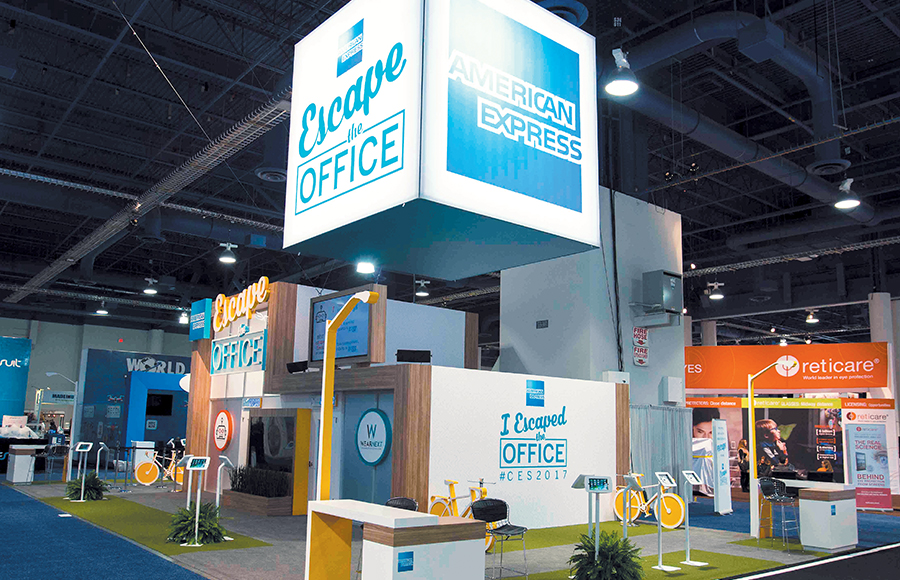
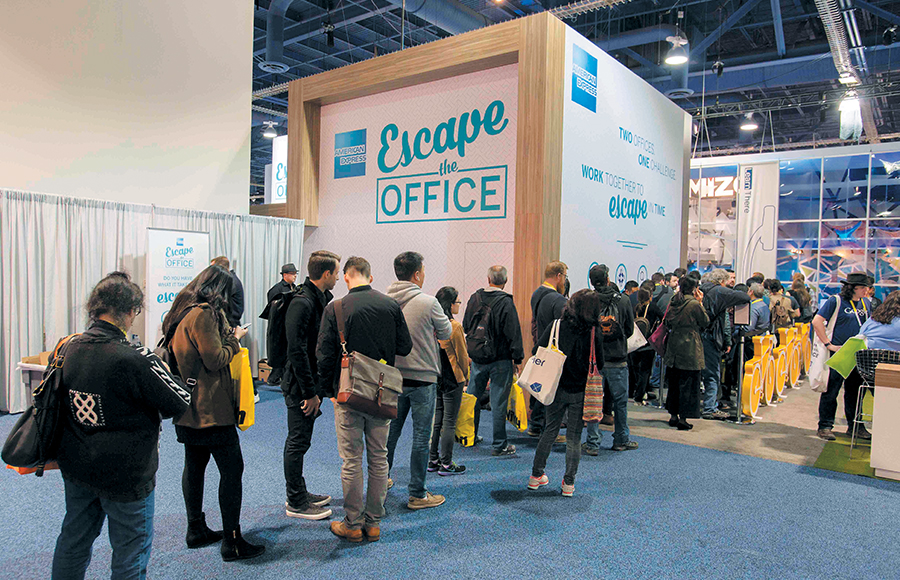
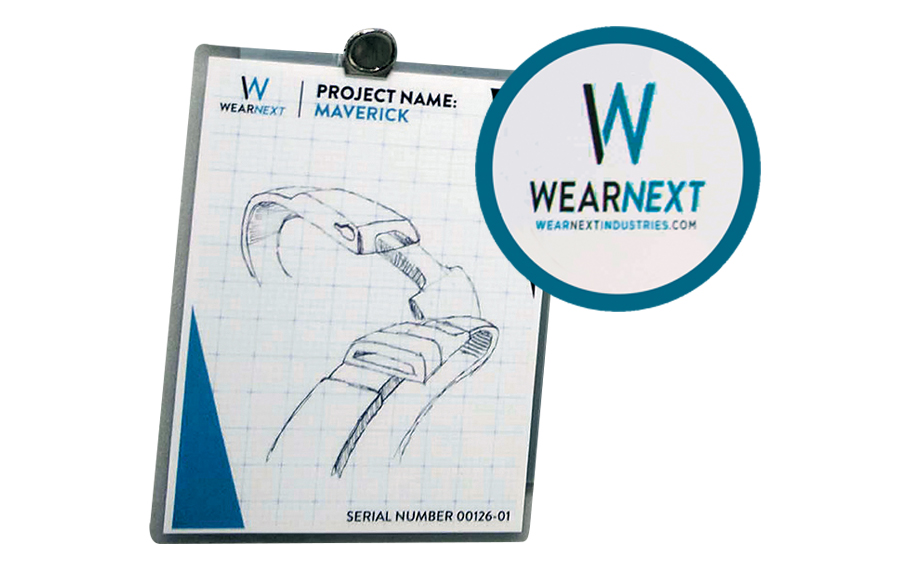
To ensure that the exhibit could handle those anticipated crowds, the company would build two 12-by-10-foot escape rooms – each dedicated to a make-believe company, one called Robot & Sons and another named WearNext Industries – and limit each experience to just seven minutes. Normally, such brevity might seem like an obvious drawback, but not in this case. "It was a smart move," says Scott Nicholson, professor of game design at Wilfrid Laurier University in Brantford, ON, Canada. "Many believe that the last few minutes of an escape-room challenge are the most exciting, so a short amount of time can give the players that rush of the 'one-minute-left' feeling without having to fill another 59 minutes in the space."
Amex Open's yardstick for the booth's success possessed an expansiveness that easily paralleled the exhibit's inventiveness. The company would calibrate its appearance at CES on five main fronts: on-site engagements; social-media impressions; earned social-media impressions (i.e., mentions appearing via sources independent of Amex Open); and card applications from attendees who participated in the "Escape the Office" activation. Specifically, it sought more card applications than it had generated at CES in 2016. The resulting metrics would help establish a baseline, since the company expected to reuse the concept at future shows and events.

Players Ready
Next, Amex Open kick-started the process of promoting the upcoming exhibit. Just as a movie trailer seeks to attract an audience with a tempting and tightly edited portrayal of the blockbuster to come, the company alerted potential customers with a fusillade of messages and teasers via an online article, social media, and a mobile app. One week before the show opened, the mobile app for its OpenForum.com resource for small-business owners and entrepreneurs – which typically receives in excess of 1 million visitors monthly – sent a push notification to all members encouraging them to RSVP for CES within the app. Once CES commenced, the company promoted its appearance at the expo by providing a brief description about the escape rooms on its Twitter, Facebook, Google+, and LinkedIn accounts.
More ingeniously, Amex Open created faux websites for its two made-up firms, Robot & Sons and WearNext Industries, and posted their URLs in its booth for attendees to see. Those who took the bait and surfed over to the sites caught a brief glimpse of the ersatz establishments and were then automatically redirected to the OpenForum page where they could linger over an article about escape rooms and discuss the popular phenomenon.
Let the Games Begin!
When CES opened last January, it dazzled in the way that only the Super Bowl of silicon can. Attendees hurtled into LG Electronics USA's tunnel of 216 OLED curved screens and mobbed Toyota Motor Corp.'s "Tron"-like concept car for the year 2030 with its artificial intelligence-powered avatar that lives in the dashboard's screen. But the traffic-building strategy that Amex Open had crafted more than counteracted that electronic excess.
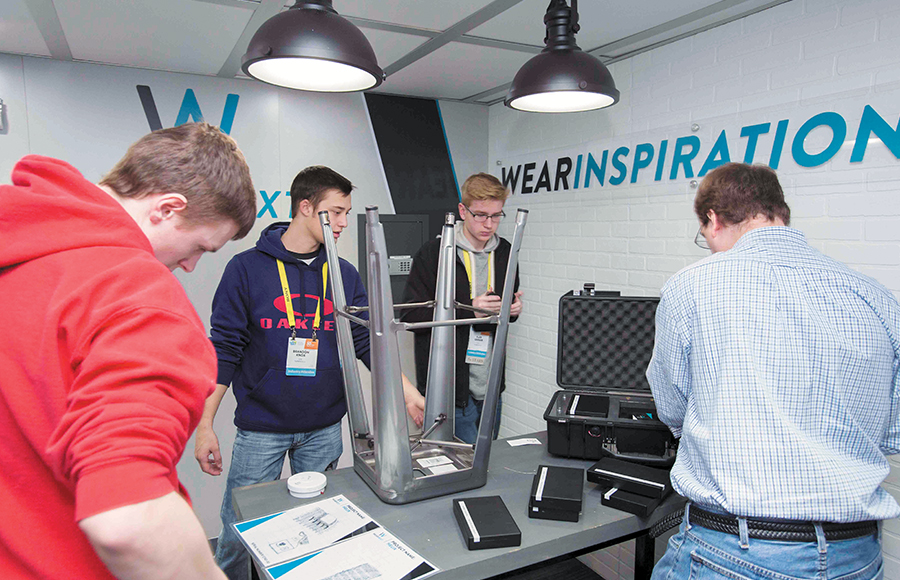
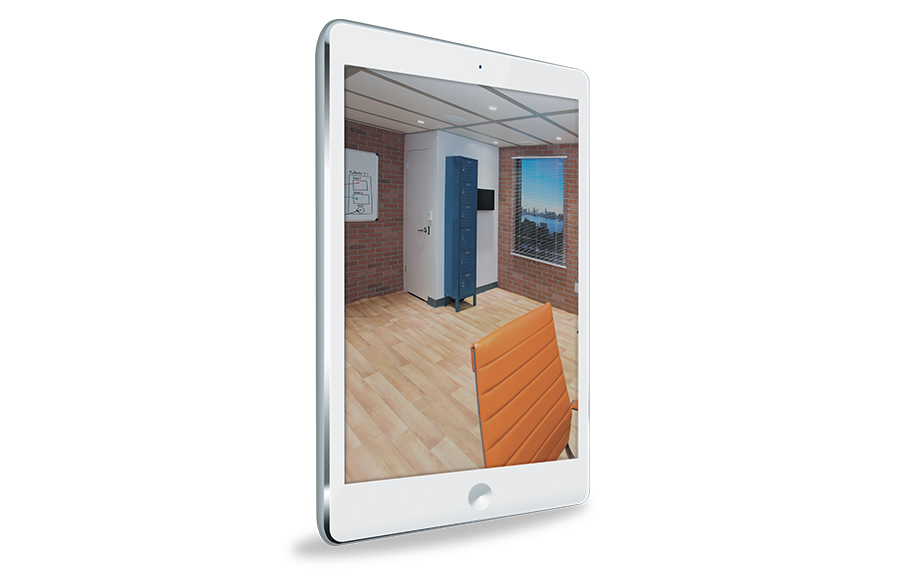
Cleverly, the company also set up 12 iPads positioned on tablet stands throughout the booth that offered a digital version of an escape-room experience while weaving Amex Open products, such as its credit cards, into the narrative. While the iPad-based challenge was purely optional, guests who tried it could enter a sweepstakes for a $500 American Express gift card and snag a so-called "clue card" that would help them in the escape rooms they were soon about to enter by revealing the location of an object they'd need to find to succeed. Looming high above, and building even more tension while attendees waited their turn, were countdown clocks over the entrance to each room that ticked away down to zero, and a digital 90-inch leaderboard that showed the top five teams that had escaped their room the quickest.
We Gotta Get Out of This Place
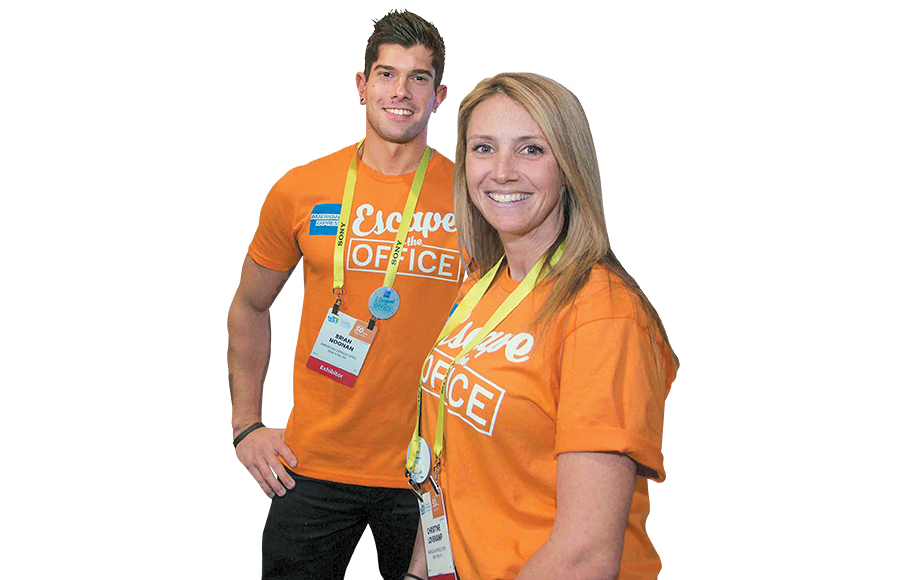
When attendees made it to the front of the line, staffers assembled them into groups of up to six players. (Larger groups who came in together were allowed to participate as one team.) Once the strangers were grouped together, they were briefly instructed that they would soon step into the role of co-workers and should get to know each other while in line. Moments later, a staffer escorted them into one of the two themed rooms and immersed the players with the full back story on their particular office.
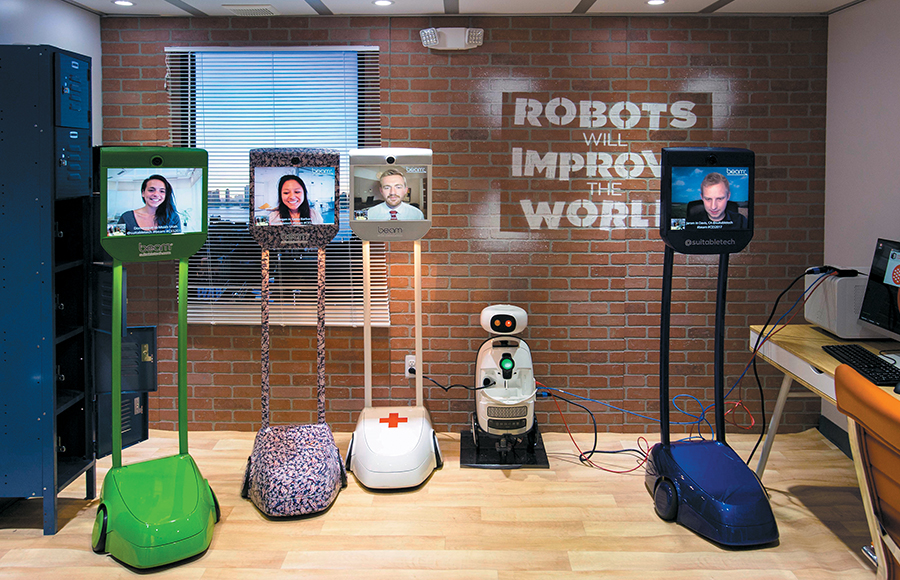
Robot & Sons' guests found themselves in the casual-chic office of a supposed industry-disrupting startup made of faux brick walls and fake wood floors of cushioned rubber. Spray painted on one of those walls was "Robots will improve the world," while a window (actually, a back-mounted LCD screen) framed the breathtaking New York skyline to further the illusion of being in the heart of Silicon Alley.
After the doors clicked shut and the recorded instructions played, a fever of enthusiasm swept over the guests, who felt the rush that comes when it's finally game time. Over the next 420 seconds of ever-diminishing time, the team hustled with the focused cooperation that usually only bees and ants know. Then, calamity struck. A power surge fried some of the room's electricity, leaving the crew helpless as time worked against them. But instead of going into organizational anaphylactic shock, the players figured out how to crack a small safe that revealed keycards and a diagram essential to opening a locked closet and restoring power to the room.


Ultimately, the way out of their predicament was the same for all groups facing an external threat, from the 300 Spartans to the Guardians of the Galaxy: teamwork, and heaps of it. While some hunkered down by the safe where the crucial diagram was located, others stepped into the closet where they followed their team members' step-by-step instructions on repairing the server and a power-modulation calibrator to restore electricity. Fingers fumbling and voices tight with tension, they frantically connected the wiring, then hastily started updating the firmware to get the robot working and hurriedly began arranging the CEO's flight.
The players were home free – or so they thought – until another glitch quickly jacked up their cortisone levels. A message played from an American Express travel rep saying the company needed the last four digits from an American Express Business card, which sent the players scurrying through the office's nooks and crannies, the hectic search for the concealed card ending when the guests found it tucked into a lab coat in the closet. With seconds to spare, the group emerged from the room with the task completed and victorious, in a demonstration of teamwork that would have put the "Mission: Impossible" crew to shame.
A similar convivial chaos occurred in the WearNext Industries room. Set in an office park in Palo Alto, CA, this scenario challenged players to wade through clues hidden in plain sight – like an OpenForum article running on a computer, which deftly wove the brand in with the activity – to identify the name of the wearable the CEO wanted to present to an investor. The activity ended when the players found a safe hidden in the wall stocked with the prototype that allowed them to complete their escape.
Game Over
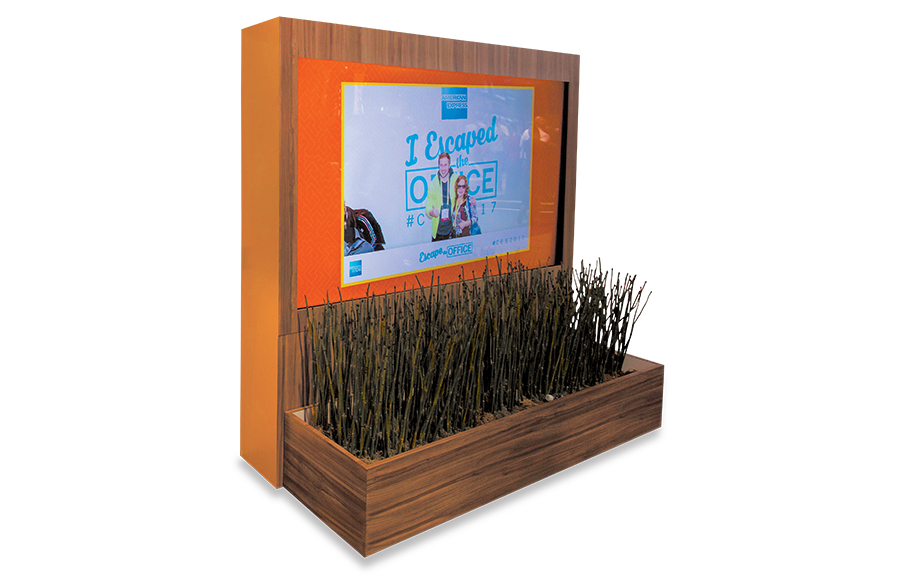
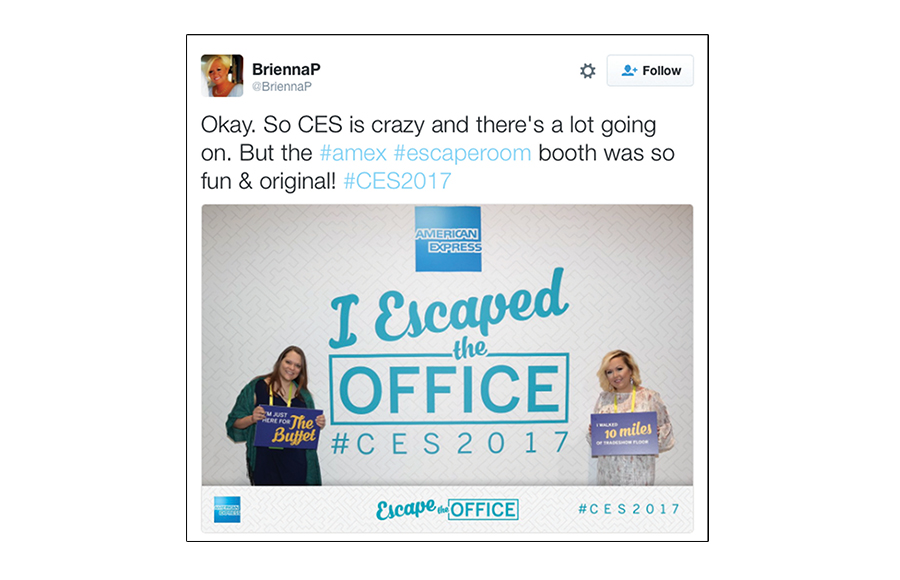
When the players exited both rooms, they received a light-up pin (if they escaped in time) and an oversized natural-cotton canvas tote bag with any of four cheeky inscriptions, including "High Capacity Analog Storage" and, naturally, "I Escaped the Office." Capping off the experience was a photo-op station where staffers encouraged attendees to take a team photo that was then posted to a digital photo board. Players could also send the digital remembrance to multiple email addresses, expanding the at-show experience to a potential audience of thousands more.
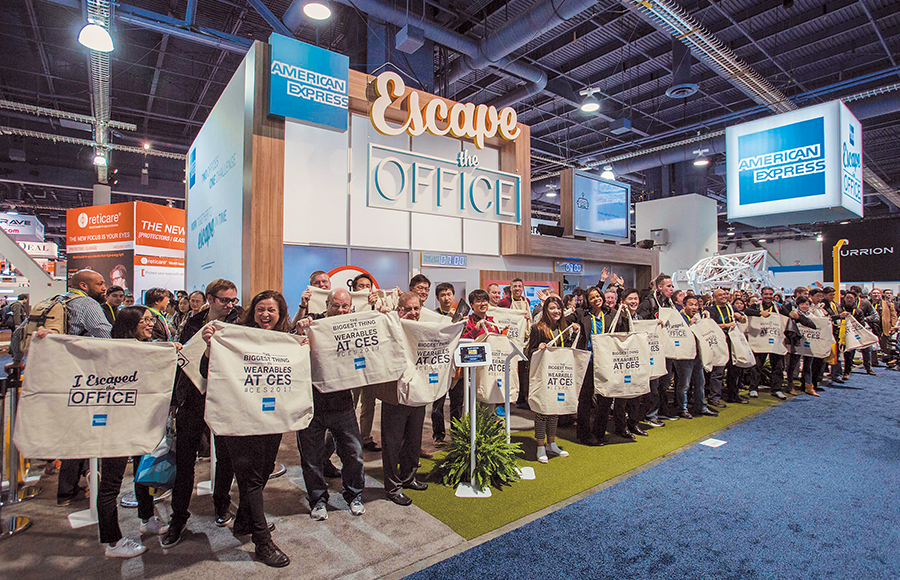
In the end, Amex Open amazed CES with a traffic builder whose heart was one of teamwork, not technology. Yet no matter how brilliant or bold its marketing acumen at the expo was, Amex Open's effort will always be ranked by the black and white judgments of the bottom line. Fortunately, the company's results were, by any evaluation, striking in the categories it measured. On-site engagements with attendees numbered 3,500, or about 17 percent greater than the previous CES. Adding to those figures, the company tallied 258,236 social-media impressions, of which 57,641 were the coveted earned social impressions. Moreover, approximately 41 percent of those who took part in the "Escape the Office" activity applied for a card, which contributed to Amex Open pulling in 29 percent more credit-card applications than it had at CES the year before.
Through the escape rooms, Amex Open was able to liberate itself from what the company felt was the captivity of a flavorless image. But the traffic builder succeeded in creating something more – a brand perception with the qualities of esprit de corp and problem solving. When it comes to great escapes, Houdini couldn't have done it better himself. E


Marketplace

- Audiovisual Equipment
- Convention Centers
- Event Design and Production
- Exhibit Fabrication
- Exhibit Producers
- Exhibit Rental
- Experiential Agency
- Flooring
- Graphics
- International Exhibit Producers
- Kiosks
- Lead Retrieval
- Modular Exhibit Systems
- Portable Display Systems
- Shipping and Transportation
- All Companies
3048R Sales and Marketing Alignment: How to Get ‑ and Stay ‑ on the Same Page
Feb. 10, 2026
3011R How to Grow Your Brand: Incorporating Brand Marketing into Your Exhibit Program
Feb. 19, 2026
4101R Boost Up: Promote Yourself from Service Provider to Strategic Business Partner
Mar. 3, 2026
6020R The @show Experience: Understand the Essentials of Exhibit Design
Mar. 10, 2026
7058R Authors Executive Series: Thrive Under Deadlines: Strategies for Success
All Sessions >>