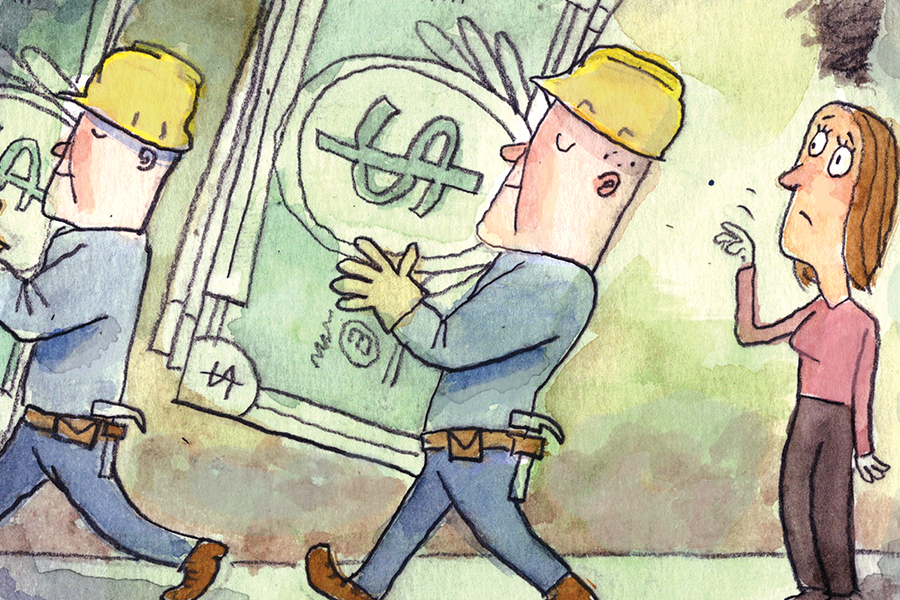
One of the many things my company does is design and produce exhibits, and when we execute a pull-and-prep, my team literally builds the entire booth – without graphics – in the warehouse before disassembling it, packing up all the parts, and shipping it. While there are many reasons to pull and prep an exhibit – make any final design tweaks, look for worn/damaged components, etc. – perhaps the most critical purpose is to be completely sure that everything my client needs for their build ends up in a shipping container and at the show instead of stuck in a warehouse.
But it does cost money. And back when I was a wet-behind-the-ears business owner, one of my clients requested to skip the pull-and-prep in order to stay within their budget. I agreed and shipped my client's booth using just the parts list that came with the shipping container. What could possibly go wrong? (I think you can see where this is going.) My team and I arrived at the venue the day prior to the show opening in order to install the exhibit. All the crates were there on time, so we dove in. And that's when things ground to a halt. One of the first items we needed were the exhibit's base plates, which were nowhere to be found. How could that be? I mean, the items were on the parts list for the container, and they should have been right on top. We emptied that crate and sorted through everything, but they were definitely not where they were supposed to be. Someone must have packed them on a different pallet when the booth was disassembled after the previous show and never recorded the change on the parts list. A call back to the warehouse confirmed that the items were still hundreds of miles away at home. Just to be clear: Base plates are important. They are literally the foundation of a booth and without them there to provide support, our entire installation process had to be put on hold.
I like to tell my clients that my work will be done at a certain time, and that at that time, I hand over the booth to them and give them the keys to the castle so they can set up their stuff. But this time, I was going to miss that all-important appointment because of those missing plates. In fact, I was going to be lucky if I had the booth set up by the start of the show. I found my client and explained why their installation was delayed, but they didn't understand what went wrong. They just knew their booth wasn't ready when they wanted it to be. Worse yet, they blamed me. Base plates or not, I wanted to sink into the floor.
Despite the speed of air travel, it was going to be hours before those parts arrived. In the meantime, my team prepped everything we could so that when the plates showed up, we could pull everything together at Olympic speed. The next morning, before the sun was up, I met the courier in the convention center parking lot to transfer the goods – it felt like a clandestine operation. I practically sprinted inside, no small feat considering the load I was schlepping, and the team was on standby when I made it to the booth with the base plates. With only a few hours left before the show opened, my crew didn't waste a second. They worked without a break to get the build done. The effort – not to mention the additional costs for the courier and extra labor – was astronomical. Due to my team's incredible efficiency and speed – and a little bit of luck – we got the booth complete before any show attendee set foot on the floor. But at that point, nothing could have made my client happy.
In my business, pull-and-prep is no longer an option, and I tell this story so that others can avoid my mistakes. There is a fine line between meeting a client's budget and cutting corners until you draw blood. In this case, saving money in the beginning made them hemorrhage money in the end. But I think business owner and client can easily meet on that fine line as long as they're both open to a little education and committed to a strong partnership with each other.
Some event marketers don't understand the reason behind paying for the labor hours required to build a booth twice, especially because nobody sees it when it's sitting on the warehouse floor. But running a pull-and-prep is about preparation, attention to detail, and care. And now that I insist my clients support my need to lay the groundwork early, they're a lot happier and I no longer have to play cloak-and-dagger in dark parking lots.


